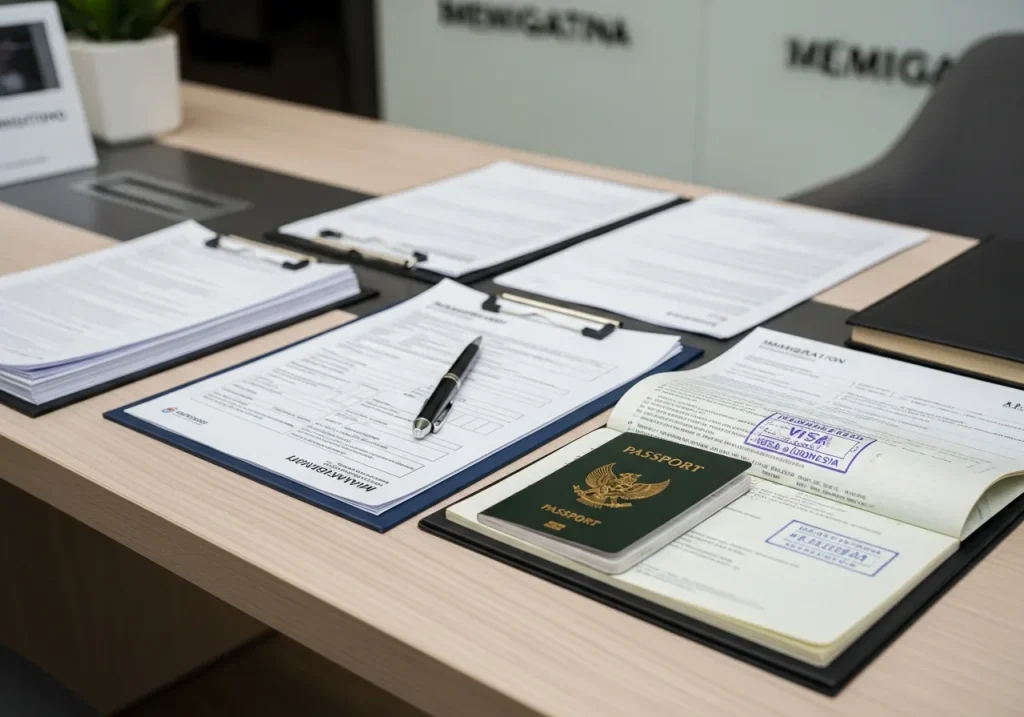
The Second Home Visa Indonesia offers a long-term residency option for individuals seeking to reside in the country, particularly Bali, without requiring active business investment. This visa category facilitates extended stays for retirees and those seeking a lifestyle change, contributing to Indonesia’s appeal for long-term expatriates.
Understanding the Indonesia Golden Visa Programme
Indonesia’s Golden Visa, officially launched nationwide in July 2024, represents a strategic initiative to attract high-value foreign direct investment and skilled individuals. By May 18, 2026, the programme had generated approximately US$2.9–3.0 billion in investment across 1,274 permits, with Bali consistently emerging as a primary destination for lifestyle and property-focused applicants. This robust performance underscores the programme’s success in attracting significant capital, predominantly from corporate entities and high-net-worth individuals seeking long-stay residency and luxury real estate opportunities. The Bali Golden Visa and Indonesia Golden Visa are integral components of this national strategy, offering various pathways to long-term residency.
Market Size and Growth Trajectory
The Golden Visa Indonesia programme has demonstrated substantial growth since its inception. Total investment through the programme reached Rp 52.1 trillion (approximately US$2.93–2.95 billion) by May 18, 2026. This figure encompasses investments from 1,274 permits, which include both individual and corporate applications. Corporate investors have been the dominant force, accounting for approximately 97–98% of the total investment, representing Rp 50.88 trillion (approximately US$2.86–2.88 billion). Individual investors, second home visa holders, and diaspora/former citizens collectively contributed the remaining Rp 309–559 billion (roughly US$17–33 million), depending on the categorisation.
The growth trajectory shows an initial rapid uptake followed by a more measured pace. From its launch to September 2025, the programme issued 1,012 permits and attracted approximately Rp 48 trillion (around US$2.7 billion) in investment. This period saw an average of about 72 permits issued per month. Subsequently, from September 2025 to May 2026 (an eight-month period), an additional 262 permits were issued, bringing in approximately Rp 4.1 trillion (US$230–232 million). The average issuance rate during this latter period dropped to about 33 permits per month, roughly half the earlier pace. This indicates a normalisation or potential slowdown in permit issuance, suggesting that the initial surge has stabilised. The average investment per permit over the full programme life stands at approximately US$2.3 million. However, for the 262 permits issued after September 2025, the average investment per permit decreased to around US$887,000. This shift suggests a reduction in very large corporate investments and an increase in mid-size investor participation.
Bali’s Role in the Golden Visa Programme
While official regional breakdowns are not publicly available, Bali is consistently cited by property and advisory sources as a primary destination for lifestyle-driven Golden Visa holders. This is particularly true for those utilising individual investor and Bali Second Home Visa routes, as well as the Bali Retirement Visa. Bali’s appeal as a prominent hub for the Indonesia Golden Visa and Bali Kitas Golden Visa is undeniable. The region attracts significant interest from expats, retirees, remote workers, investors, and families seeking long-term residency, making the Indonesia Long Stay Visa and Indonesia Residency Visa particularly attractive here.
What You Get with an Indonesia Golden Visa
The Indonesia Golden Visa, including the Golden Visa Bali options, provides a range of significant benefits for long-term residents. These benefits are designed to offer stability, flexibility, and a high quality of life within Indonesia.
- Long-Term Residency: The primary benefit is the ability to reside in Indonesia for an extended period, typically between 5 and 10 years, depending on the investment tier. This provides stability not offered by short-term visas.
- Multiple Entry Privileges: Holders of the Golden Visa Indonesia receive multiple entry permits, allowing for unrestricted travel in and out of the country without needing to reapply for a visa each time.
- Streamlined Immigration Procedures: The programme often includes expedited processing for visa applications and renewals, reducing administrative burdens.
- Access to Local Services: Residents gain access to various local services, including banking, healthcare, and education, facilitating integration into Indonesian society.
- Investment Opportunities: While not a direct benefit, the visa provides a stable platform for individuals interested in further investment within Indonesia, particularly in sectors like real estate or tourism.
- Family Inclusion: Dependent family members, such as spouses and children, can often be included in the Golden Visa application, allowing families to reside together in Indonesia. This makes the Indonesia Residency Visa and Bali Residency Visa particularly appealing for families.
- No Sponsor Required: Unlike many other Indonesian visas, the Golden Visa does not necessitate a local sponsor, offering greater independence to the applicant.
- Reduced Bureaucracy: The programme is designed to minimise bureaucratic hurdles often associated with long-term residency applications, offering a more straightforward process.
Who This Is For
The Indonesia Golden Visa, including the Bali Golden Visa and Indonesia Second Home Visa, is specifically designed for a diverse group of individuals seeking long-term residency and stability in Indonesia. This includes:
- Expats: Individuals looking for an extended stay in Indonesia, whether for work, lifestyle, or retirement, will find the Indonesia Long Term Visa and Bali Long Term Visa highly suitable.
- Retirees: The Bali Retirement Visa and Indonesia Retirement Visa offer a secure path for individuals wishing to spend their retirement years in Indonesia, particularly in areas like Bali, known for its serene environment and expatriate communities.
- Remote Workers: While not a specific digital nomad visa, the long-term residency offered by the Indonesia Golden Visa provides a stable base for remote professionals who wish to live and work from Indonesia without needing frequent visa renewals.
- Investors: High-net-worth individuals and corporate entities seeking to make significant investments in Indonesia will benefit from the Indonesia Investor Visa and Bali Investor Visa, which provide residency in exchange for capital injection. This includes those interested in the Bali Investment Visa and Indonesia Investment Visa.
- Families: The ability to include dependants makes the Indonesia Golden Visa an attractive option for families looking to relocate and establish a long-term home in Indonesia, enjoying the benefits of the Indonesia Permanent Residence or Bali Permanent Residence.
Comparative Overview: Golden Visa vs. Second Home Visa
| Feature | Indonesia Golden Visa (Investor KITAS) | Indonesia Second Home Visa |
|---|---|---|
| Purpose | Attract significant investment, long-term residency for investors. | Long-term residency for non-working individuals (retirees, lifestyle). |
| Investment Requirement | Rp 300 million (approx. US$19,000) for 5 years; Rp 600 million (approx. US$38,000) for 10 years. | Proof of funds in an Indonesian bank account: Rp 2 billion (approx. US$125,000). |
| Duration | 5 or 10 years. | 5 or 10 years. |
| Work Rights | Yes, generally tied to the investment or company. | No, explicitly for non-working individuals. |
| Sponsor Required | No, direct application. | No, direct application. |
| Key Benefit | Stability for investors, multiple entry, no local sponsor. | Long-term stay for retirees/lifestyle, multiple entry. |
| Target Audience | Investors, high-net-worth individuals, corporate executives. | Retirees, individuals seeking extended leisure stay. |
Frequently Asked Questions
What is the Indonesia Golden Visa?
The Indonesia Golden Visa is a long-term residency programme launched in July 2024, designed to attract significant foreign investment and high-net-worth individuals. It offers residency for 5 or 10 years in exchange for a specified investment, primarily targeting corporate and individual investors seeking stability and multiple entry privileges.
What is the Second Home Visa Indonesia?
The Second Home Visa Indonesia is a long-term visa option for individuals who wish to reside in Indonesia for an extended period without engaging in employment. It requires proof of substantial funds in an Indonesian bank account and is popular among retirees and those seeking a lifestyle residency, particularly in Bali.
Can I work with an Indonesia Golden Visa?
Yes, generally, the Indonesia Golden Visa (especially the investor KITAS variant) is tied to investment activities, which may include work rights related to that investment. However, the Second Home Visa Indonesia explicitly does not grant work rights, being designed for non-working individuals.
What is the difference between the Golden Visa and Second Home Visa?
The primary difference lies in their purpose and requirements. The Golden Visa is for investors, requiring a direct investment into the country, and often includes work rights. The Second Home Visa is for non-working individuals, requiring proof of funds in a local bank account, and does not grant work rights.
For further details on the Indonesia Golden Visa, Second Home Visa Bali, or any other long-term visa options, please request a free eligibility assessment on WhatsApp or email us at [email protected]. Our team at Bali Golden Visa, a licensed immigration consultancy, is ready to assist you end-to-end.